 English


0 item(s)
View cart
You have no items in your shopping cart.
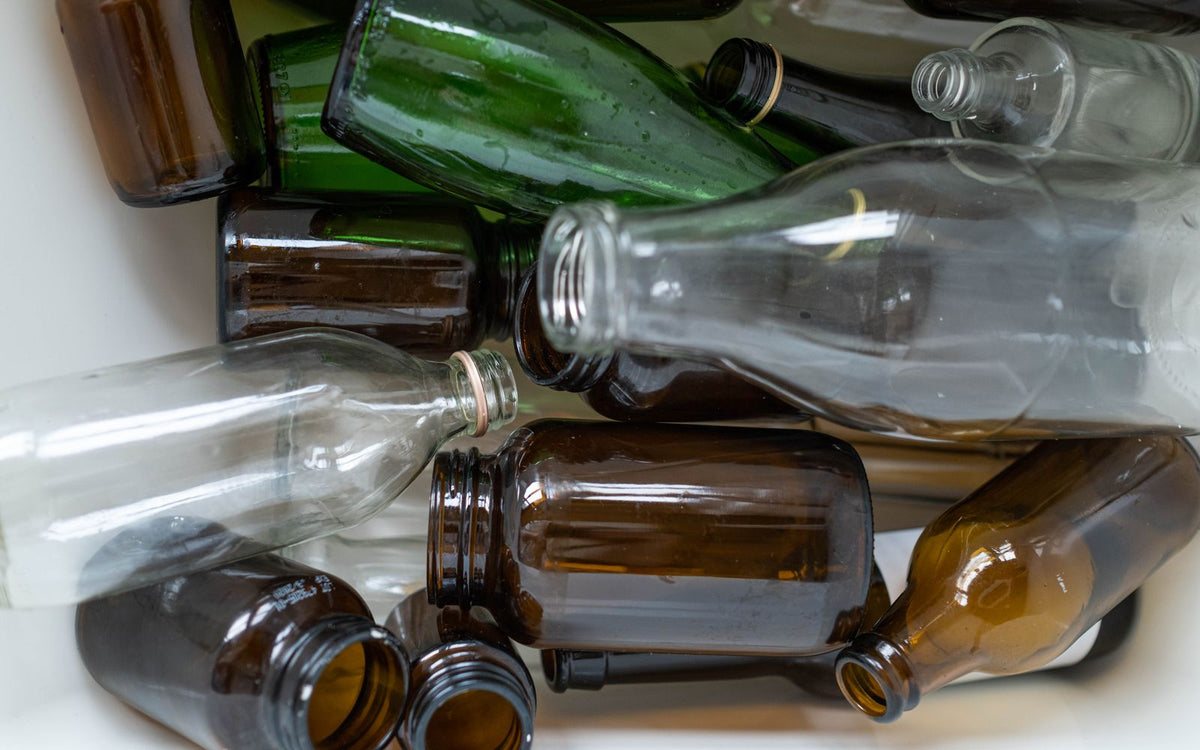
Amber glass dropper bottles are widely recyclable. This post covers general glass recycling guidance and packaging sustainability considerations.
Glass is made from abundant materials, mainly sand, soda ash and limestone, and it's chemically inert, so it doesn't react with what it holds. It can also be recycled again and again without losing quality. Recycled glass, called cullet, melts at a lower temperature than raw materials, which saves energy when it's used to make new bottles.
A dropper bottle is made of several materials, so it helps to take it apart:
Iodine stains. To prepare an empty bottle for recycling or reuse, rinse it several times with warm water. A little dish soap helps. A light amber tint left on the glass is normal and doesn't affect recycling. Avoid pouring leftover concentrated product down the drain in large amounts; follow local guidance for disposing of household products.
Clean amber dropper bottles are useful for storing homemade extracts, essential oil blends or other light-sensitive liquids. Mark reused bottles clearly so no one confuses them with the original product. If you'd rather keep using the dropper with a new bottle of iodine, our replacement glass dropper fits our 1oz and 2oz bottles.
Every bottle of Lugol's Solution ships in amber glass with a glass dropper, which keeps the product stable and keeps the bottle recyclable.
Can I put the whole dropper bottle in the recycling bin?
It's best to separate the parts. Recycle the glass bottle, and check local rules for the cap, bulb and pipette.
Does sustainable sourcing cost more?
Sometimes, though not always — sourcing decisions involve trade-offs between cost, supply reliability, and environmental impact that vary by supplier.
What's the best way to store and care for the bottle before it's ever recycled?
See our complete storage guide.
Shop Lugol's Solution — the traditional, trusted way people have supported their iodine intake for over 200 years.
Mark Donovan writes about the practical, self-reliant side of iodine sourcing and storage for the Iodine Journal.
This article is for general educational purposes only and has not been evaluated by the FDA. It is not intended to diagnose, treat, cure, or prevent any disease, and is not a substitute for advice from a qualified healthcare provider — especially if you are pregnant, nursing, taking thyroid medication, or managing a thyroid condition.

Writes for Lugols Originals on the chemistry, history and practical use of iodine. Read the full profile ›


