 English


0 item(s)
View cart
You have no items in your shopping cart.
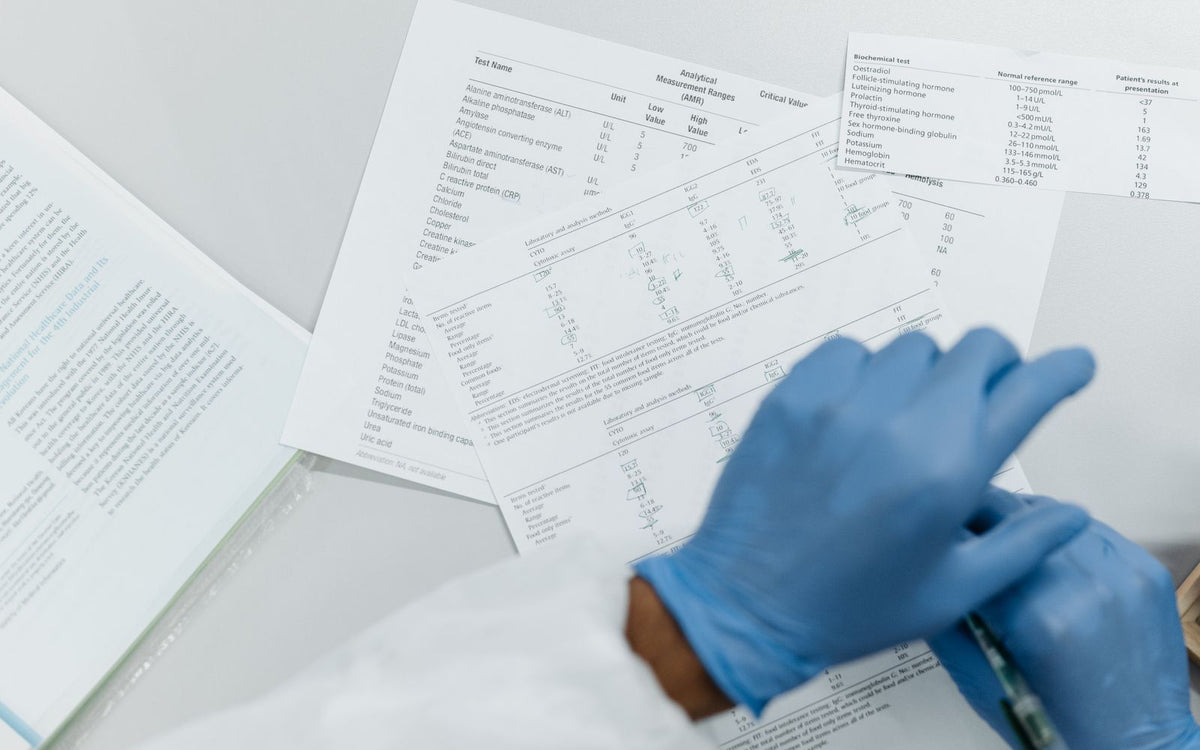
Purity testing for a liquid iodine product typically involves titration and spectrophotometric analysis. We walk through what these testing methods actually measure.
Testing an iodine solution comes down to a handful of questions: is it what the label says it is, is it the strength the label says, and is it free of things that shouldn't be there? Labs answer those with four main types of testing.
Identity tests confirm that a substance is actually iodine and iodide rather than something else. Classic identity checks for iodine include its reaction with starch, which turns a deep blue-black in the presence of iodine, and its characteristic color in certain solvents. Instrumental methods such as UV-visible spectrophotometry give a more precise fingerprint.
An assay measures how much iodine is actually in the solution, so it can be compared with the label. The long-standing standard method for iodine is titration with sodium thiosulfate, which reacts with iodine in a precise, predictable way. Starch is used as an indicator: the blue-black color disappears at the exact point when all the iodine has reacted. See The Basics of Titration.
Purity testing looks for things that shouldn't be in the product. Typical checks include:
Labs and manufacturers also check appearance, color and clarity, and they confirm that each bottle is filled to the right volume. These simpler checks catch problems that chemistry alone can miss.
Quality testing happens at two stages. Raw materials arrive with a supplier's Certificate of Analysis showing they meet specification, often USP grade (see What Does USP Grade Mean?). The finished product is then tested to confirm strength and quality in the bottle the customer actually receives. Both matter.
Some testing is done in-house; some is sent to independent third-party labs. Third-party testing adds a layer of objectivity because the lab has no stake in the result. Accredited labs often follow ISO/IEC 17025, an international standard for testing laboratory competence.
Testing results are summarized on a Certificate of Analysis. Here's how to read one. Lugol's Original's posts its Certificates of Analysis so customers can check the numbers behind our Lugol's Solution and other iodine products.
Should I talk to a doctor before starting?
Yes. Anyone considering a new supplement — especially one involving iodine — should check in with a healthcare provider first, particularly if pregnant, nursing, or managing a thyroid condition or thyroid medication.
Does testing affect how I should store my bottle?
Purity is set at manufacturing — what you control afterward is storage. See How to Store Lugol's Solution for Maximum Freshness.
Shop Lugol's Solution — the traditional, trusted way people have supported their iodine intake for over 200 years.
Lauren Mitchell covers comparisons, formats, and quality questions for the Iodine Journal.
This article is for general educational purposes only and has not been evaluated by the FDA. It is not intended to diagnose, treat, cure, or prevent any disease, and is not a substitute for advice from a qualified healthcare provider — especially if you are pregnant, nursing, taking thyroid medication, or managing a thyroid condition.

Writes for Lugols Originals on the chemistry, history and practical use of iodine. Read the full profile ›


