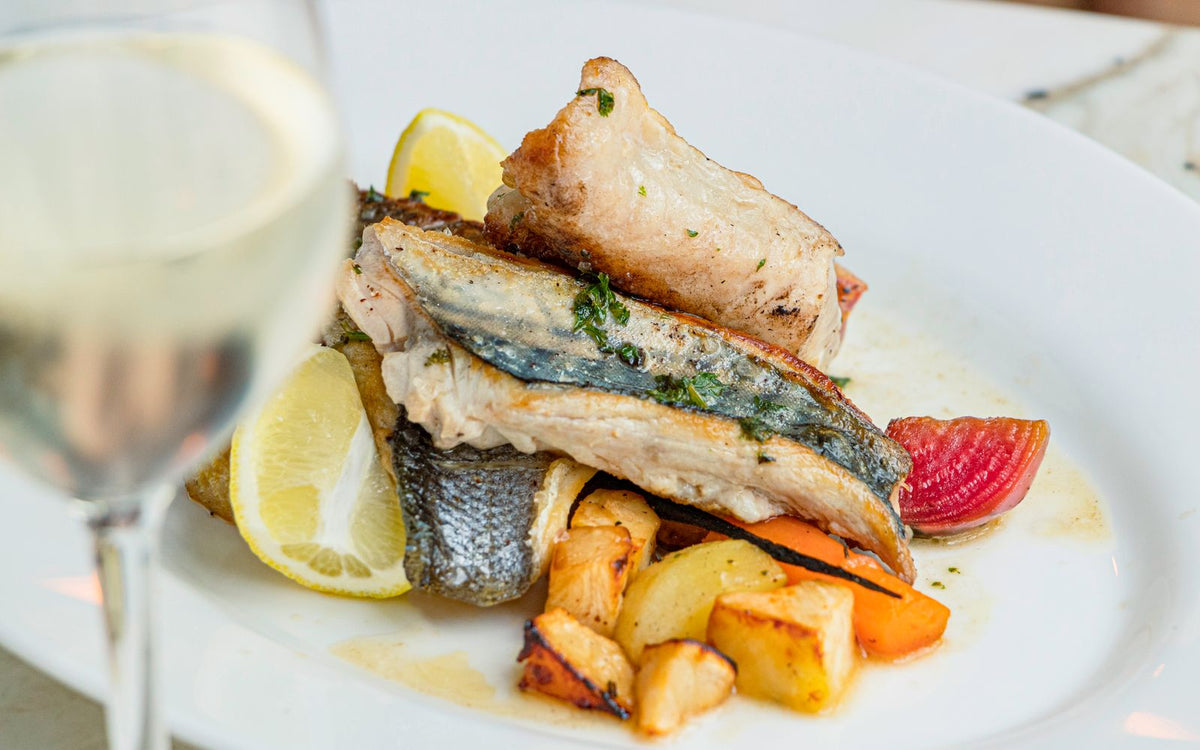
Baked cod fillet served with roasted potatoes, lemon and herbs
Recipes

Baked Cod with Lemon, Dill and New Potatoes

Most people overcook cod, once, and then decide they do not like cod. It is a forgiving fish if you give it a shorter time than feels right and let it finish on the residual heat.

This is a one-pan dinner: potatoes go in first, fish joins them later, and the whole thing lands on the table in about forty minutes with one sheet pan to wash.

Why this one is iodine-rich

Cod is among the highest-iodine fish available, and haddock and pollock are close behind. The potatoes contribute a small amount, mostly in the skin, and the butter adds a little dairy iodine. It is a genuinely well-stacked plate without a scrap of seaweed in it.

Ingredients

Serves 2.

  • 2 cod loin fillets, about 5 oz each, skin on
  • 1 lb baby potatoes, halved
  • 3 tbsp olive oil
  • 2 tbsp butter, softened
  • 1 lemon — zest and juice of half, the rest cut into wedges
  • Small bunch of dill, roughly chopped
  • 2 garlic cloves, thinly sliced
  • Salt and black pepper

Method

  1. Heat the oven to 425°F. Toss the halved potatoes with 2 tbsp of the oil and a good pinch of salt, spread them cut-side down on a sheet pan and give them 25 minutes.
  2. Meanwhile, mash the butter with the lemon zest, half the dill, a pinch of salt and plenty of pepper.
  3. Take the pan out. Push the potatoes to the edges, scatter the garlic into the middle, and sit the cod fillets skin-side down in the gap. Rub the remaining oil over the fish and season.
  4. Dot the herb butter over the fillets. Return to the oven for 10–12 minutes, depending on thickness.
  5. The fish is done when it has just turned opaque and the flakes separate with light pressure. Pull it out slightly before you think it is ready and let the pan rest for 3 minutes.
  6. Squeeze over the lemon juice, scatter the rest of the dill, and serve with the wedges.

Notes and swaps

  • Other fish. Haddock, pollock and hake all work and all carry iodine well. Adjust the time for thickness, not for species.
  • Frozen fillets. Perfectly good here. Thaw fully and pat very dry, or the butter will not stick and the fish will steam.
  • Make it greener. Throw a couple of handfuls of spinach or chard onto the pan for the last 3 minutes.
  • Sustainability. Cod stocks vary a lot by fishery. Check the label for the catch area and certification if that matters to you.

Common questions

Does cooking destroy the iodine?
Some is lost in cooking, particularly if you boil food and throw the water away. Roasting like this keeps most of it on the plate, which is part of why one-pan cooking suits these ingredients.

How often should I eat fish for iodine?
Common dietary guidance is a couple of servings of fish a week, one of them oily. That is a general population recommendation rather than an iodine prescription — your own needs are a question for a healthcare provider or dietitian.

The food-first habit

Two fish dinners a week does a lot of quiet work. If you have been using Lugol's Iodine to get on top of a shortfall, meals like this are how you keep it there once you have.

Recipes are published for general interest and are not medical or dietary advice. Iodine requirements vary from person to person, and iodine has an upper limit as well as a recommended intake. If you are pregnant, nursing, taking thyroid medication or managing a thyroid condition, speak to your healthcare provider before making significant changes to your iodine intake. These statements have not been evaluated by the Food and Drug Administration.

K
Kaley Schmidt
Iodine Journal

Writes for Lugols Originals on the chemistry, history and practical use of iodine. Read the full profile ›

Just added to your wishlist:
My Wishlist
You've just added this product to the cart:
Go to cart page