 English

0 item(s)
View cart
You have no items in your shopping cart.
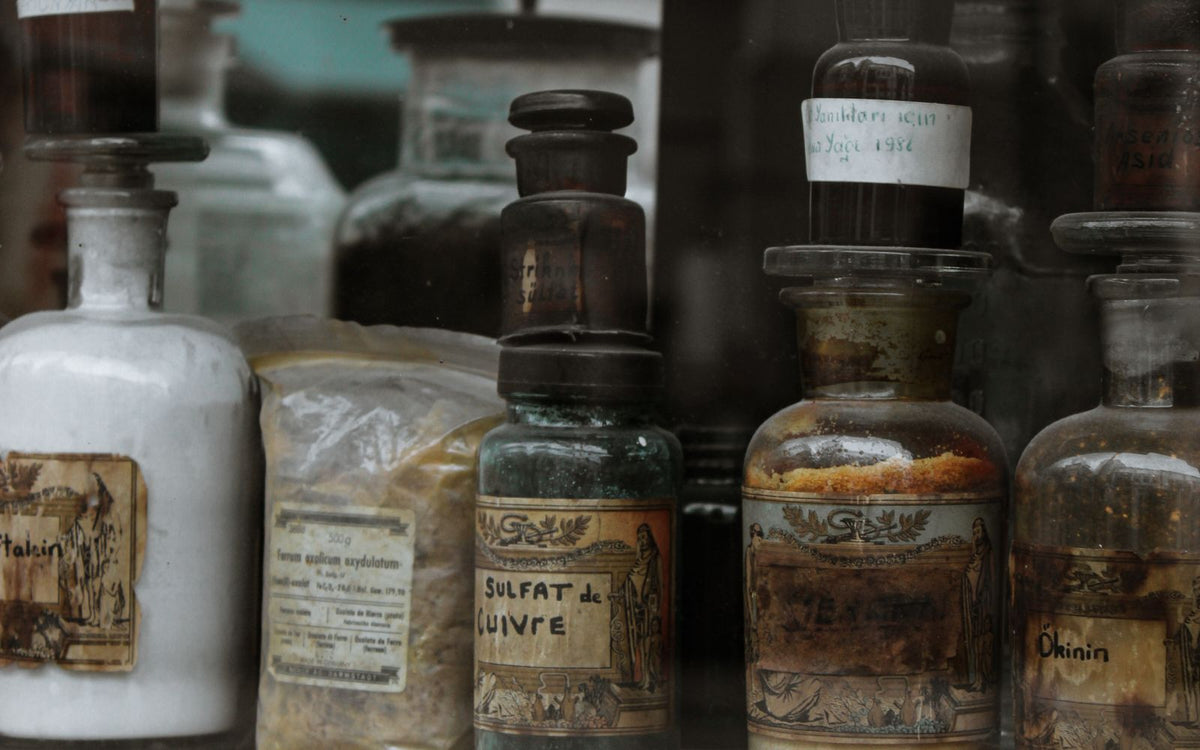
From its 1811 discovery by Bernard Courtois to its current role in liquid supplements, iodine has a two-century scientific history. We trace the major milestones.
French chemist Bernard Courtois was making saltpeter for gunpowder from seaweed ash during the Napoleonic Wars. When he added sulfuric acid to the ash, a violet vapor rose and condensed into dark, shiny crystals. He had found a new element. Read the full story in The Story of Bernard Courtois.
Joseph Louis Gay-Lussac confirmed it was a new element and named it iode, from the Greek iodes, meaning "violet." Humphry Davy, working in Paris at the same time, also studied it, and the English name became "iodine." See How Iodine Got Its Name.
Within a decade, physicians were experimenting with iodine. Geneva physician Jean-François Coindet began using iodine preparations around 1820, connecting it to seaweed-based folk remedies that had been used for centuries.
Paris physician Jean Lugol published a solution that paired iodine with potassium iodide in water. Because iodine alone barely dissolves in water, this pairing was the breakthrough that made a stable liquid iodine possible. Lugol's iodine has remained in pharmacopeias ever since. See The History of Lugol's Iodine.
Alcohol-based iodine tinctures became a fixture of 19th-century medicine and were carried in field kits through the American Civil War and both World Wars. See Iodine's Historical Antiseptic Use.
In 1895, German chemist Eugen Baumann discovered that the thyroid gland contains unusually high concentrations of iodine. That finding tied the element to the thyroid for the first time.
Edward Kendall isolated thyroxine in 1914, and Charles Harington determined its structure in 1926, confirming that iodine is built directly into the hormone. Triiodothyronine (T3) was identified in 1952.
School-based studies in Ohio led by David Marine showed the impact of iodine intake on communities with low-iodine soil. In 1924, iodized salt arrived in Michigan and then nationwide. See A Short History of Iodized Salt in the U.S.
The World Health Organization and UNICEF launched a push for universal salt iodization, and the number of countries with population-wide iodine shortfalls fell dramatically over the next three decades.
Iodine reaches people through iodized salt, dairy, seafood and seaweed, and through supplements for people who want a measured, consistent amount. More than two centuries after Lugol's work, his pairing of iodine and potassium iodide is still the basis of Lugol's Solution, sold in strengths from 2% to 20%.
Is this historical formula still relevant, or just a marketing story?
It's both. The historical formula has held up because the underlying chemistry works, not just because it's old — but longevity alone isn't a health claim, and any supplement decision should be made with your own health context in mind.
Where does that timeline lead today?
See our complete guide to Lugol's Solution usage and protocols for how the formula is used now.
Shop Lugol's Solution — the traditional, trusted way people have supported their iodine intake for over 200 years.
Arjun Malhotra writes the research- and history-focused pieces for the Iodine Journal.
This article is for general educational purposes only and has not been evaluated by the FDA. It is not intended to diagnose, treat, cure, or prevent any disease, and is not a substitute for advice from a qualified healthcare provider — especially if you are pregnant, nursing, taking thyroid medication, or managing a thyroid condition.

Writes for Lugols Originals on the chemistry, history and practical use of iodine. Read the full profile ›


