 English


0 item(s)
View cart
You have no items in your shopping cart.
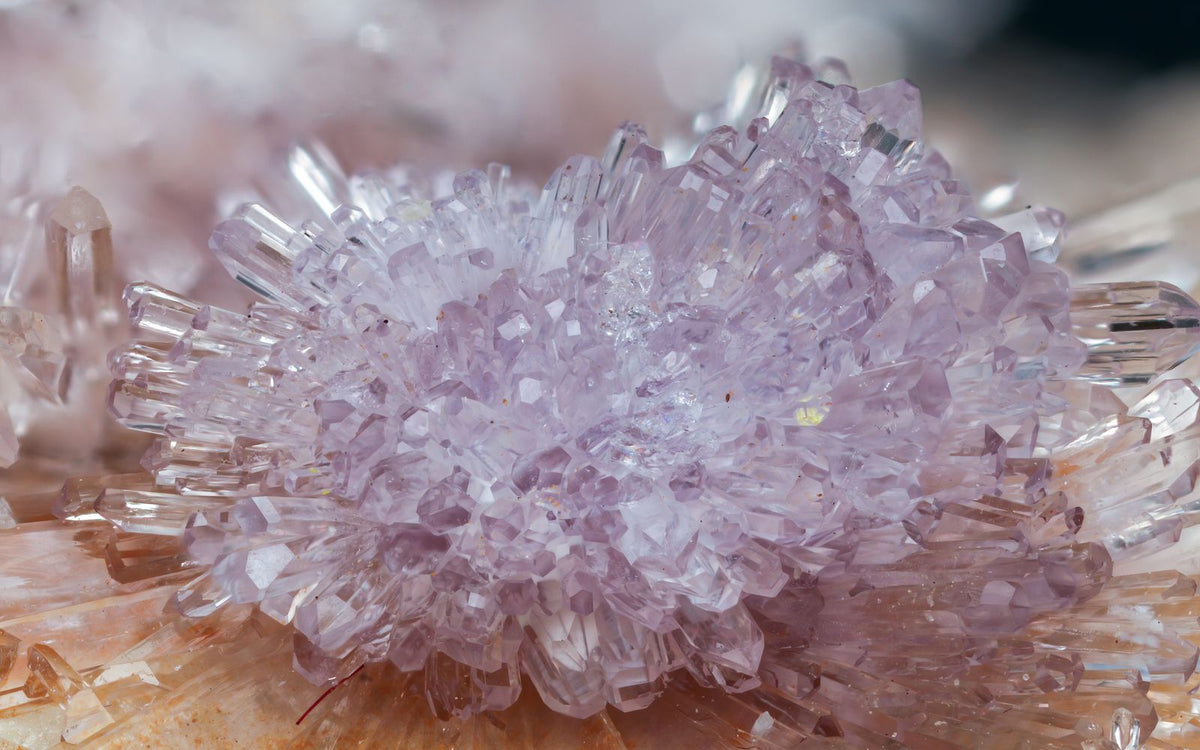
Iodine's name comes from the Greek word for "violet," describing the color of its vapor. A short etymology and discovery story.
The story starts in Paris in 1811. Bernard Courtois, a chemist producing saltpeter for France's gunpowder supply, was extracting chemicals from seaweed ash. When he added sulfuric acid to the leftover liquid, a cloud of violet vapor rose from the vessel and condensed on cold surfaces as dark, glittering crystals. Courtois knew he had something new but lacked the resources to study it fully. See The Story of Bernard Courtois.
Courtois shared samples with other chemists, and in 1813 Joseph Louis Gay-Lussac published work confirming it was a new element. He proposed the name iode, from the Ancient Greek ἰώδης (iōdēs), meaning "violet-colored," itself from ion, the Greek word for the violet flower. The name described exactly what Courtois had seen: that striking purple vapor.
At the same time, English chemist Humphry Davy, who was visiting Paris with special permission during the Napoleonic Wars, also studied the substance and reached the same conclusion. In English, the name was formed by analogy with chlorine, which Davy had named a few years earlier from the Greek word for pale green. The "-ine" ending became the standard for the whole halogen family: fluorine, chlorine, bromine, iodine and astatine.
Yes. Solid iodine is a dark gray-black with a metallic sheen, but warm it and it sublimes directly into a beautiful violet vapor. It also turns violet when dissolved in certain solvents. In water with iodide, as in Lugol's iodine, it takes on a deep amber-brown color instead. See Why Iodine Is Classified as a Halogen and A Timeline of Iodine.
Why does Lugol's iodine look brown if iodine vapor is violet?
In water with iodide, iodine forms a complex called triiodide, which gives the solution its amber-brown color.
Is this historical formula still relevant, or just a marketing story?
It's both. The historical formula has held up because the underlying chemistry works, not just because it's old — but longevity alone isn't a health claim, and any supplement decision should be made with your own health context in mind.
Where can I read how this element is used in a bottle today?
See our complete guide to Lugol's Solution usage and protocols.
Shop Lugol's Solution — the traditional, trusted way people have supported their iodine intake for over 200 years.
Arjun Malhotra writes the research- and history-focused pieces for the Iodine Journal.
This article is for general educational purposes only and has not been evaluated by the FDA. It is not intended to diagnose, treat, cure, or prevent any disease, and is not a substitute for advice from a qualified healthcare provider — especially if you are pregnant, nursing, taking thyroid medication, or managing a thyroid condition.

Writes for Lugols Originals on the chemistry, history and practical use of iodine. Read the full profile ›


