 English


0 item(s)
View cart
You have no items in your shopping cart.
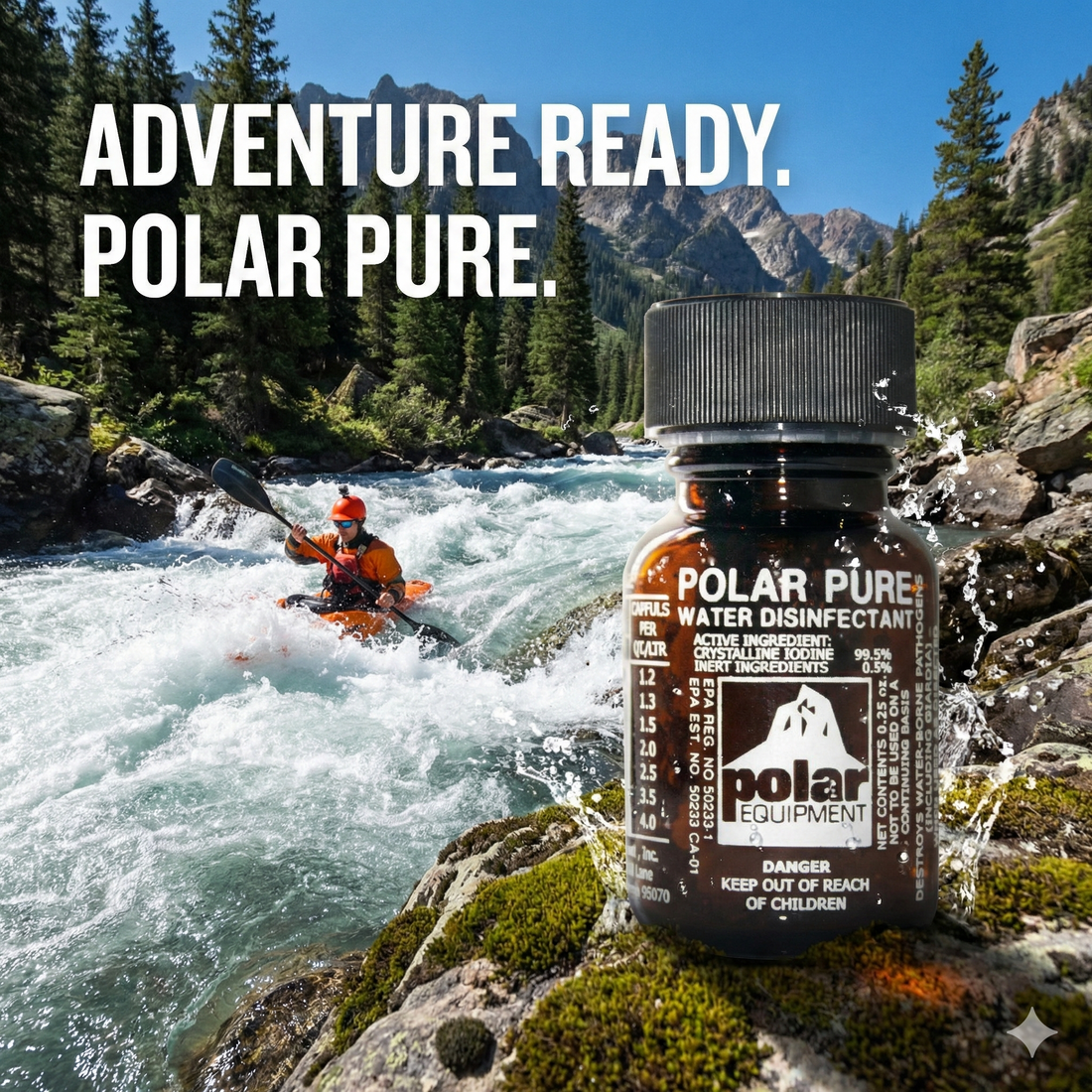
Polar Pure is an iodine-based water treatment system used by hikers, backpackers, and campers. A single bottle treats more than 2,000 gallons of water — making it a compact, cost-effective option for field use and long-term storage. Unlike single-use tablets or filter cartridges, Polar Pure uses crystalline iodine that remains effective indefinitely when stored properly.
Polar Pure uses a saturated iodine solution to treat drinking water in the field. The bottle contains iodine crystals that continuously saturate the water inside the bottle — you add a measured amount of that saturated solution to your water container, wait the required contact time, and the water is treated. The crystals are not consumed in the process, which is why a single bottle can treat thousands of gallons over its lifetime. Temperature affects the concentration of the saturated solution; the bottle includes a thermometer and dosing chart to help with correct treatment at any temperature.
Fill the Polar Pure bottle with water and allow the iodine crystals to saturate — this takes approximately one hour at room temperature (longer in cold conditions). Check the built-in thermometer and use the dosing chart on the bottle to determine the correct number of capfuls to add to your water container. Wait the required contact time before drinking. Full instructions are printed on the bottle.
One bottle treats more than 2,000 gallons of water. For most users, this represents years of use from a single purchase. The iodine crystals are not consumed during the process — only the saturated solution is used, and the crystals continuously re-saturate the water in the bottle.
Yes — colder water produces a less concentrated saturated solution, which means more capfuls are needed. The built-in thermometer and dosing chart on the bottle account for this: always check the temperature and follow the chart.
Iodine treatment is commonly used against bacteria and viruses in drinking water. It has limited effectiveness against Cryptosporidium, which requires filtration or other treatment methods. For water sources where Cryptosporidium is a concern, use Polar Pure in combination with a filter rated for protozoa removal.
This is a water treatment product, not a dietary supplement. Follow all label instructions.


