 English


0 item(s)
View cart
You have no items in your shopping cart.
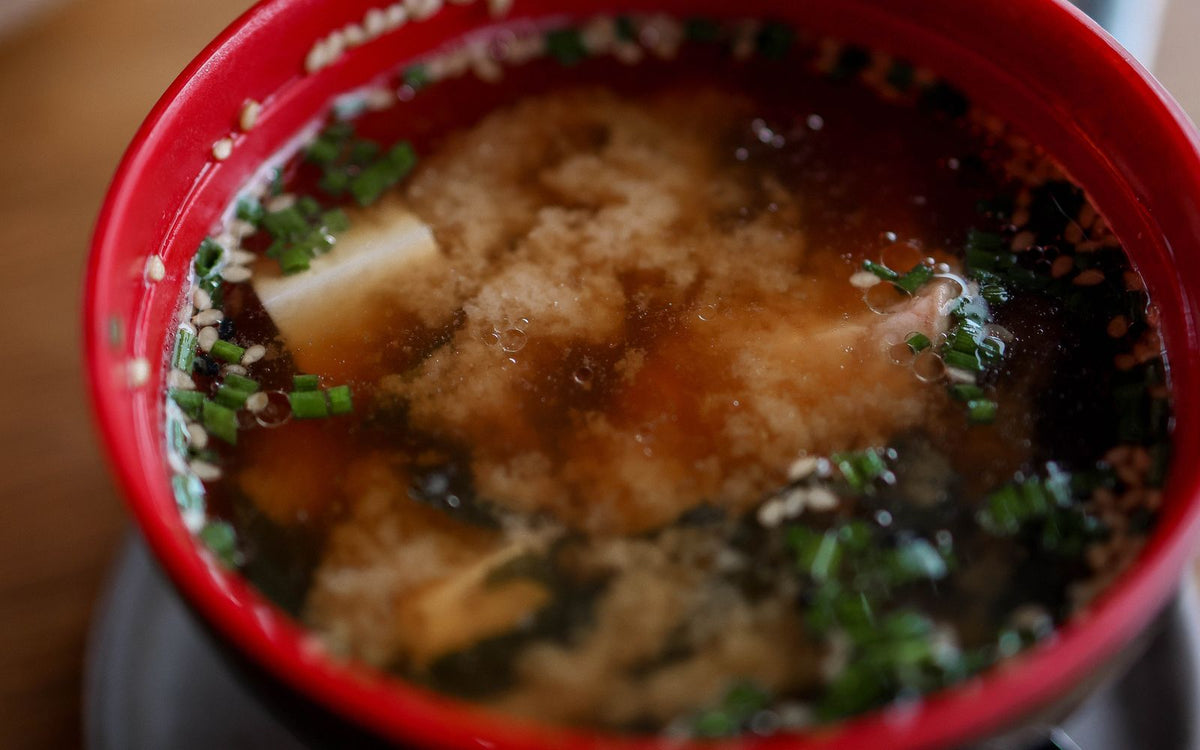
If you only learn one iodine-rich recipe, make it this one. It takes ten minutes, keeps in the fridge for three days, and the main ingredient costs a few dollars for a bag that will last you months.
Wakame is a soft, mild seaweed that rehydrates in about five minutes. It does not taste like the sea in an aggressive way — it tastes green and slightly sweet, closer to spinach than to anything you would call fishy.
Seaweeds are the richest natural food source of iodine there is, and wakame sits in a comfortable middle of the range — considerably more than fish or dairy, considerably less than kelp. Miso adds a little more, and if you build the broth on kombu (see the note below) you add more again.
Serves 2.
Can I use instant miso packets?
You can, and it is still a decent bowl. You lose control of the salt and most packets contain very little actual seaweed, so add your own wakame either way.
How often is reasonable?
A bowl a few times a week is an ordinary way to eat in a lot of the world. Iodine has an upper limit as well as a lower one, so variety matters more than volume — rotate this with the dairy and fish recipes rather than eating seaweed every day.
Supplements are good at closing a gap quickly. Meals are what hold the line afterwards. If you have been using Lugol's Iodine to get on top of a shortfall, a rotation of bowls like this is how the habit becomes part of ordinary cooking rather than something you have to remember.
Recipes are published for general interest and are not medical or dietary advice. Iodine requirements vary from person to person, and iodine has an upper limit as well as a recommended intake. If you are pregnant, nursing, taking thyroid medication or managing a thyroid condition, speak to your healthcare provider before making significant changes to your iodine intake. These statements have not been evaluated by the Food and Drug Administration.


