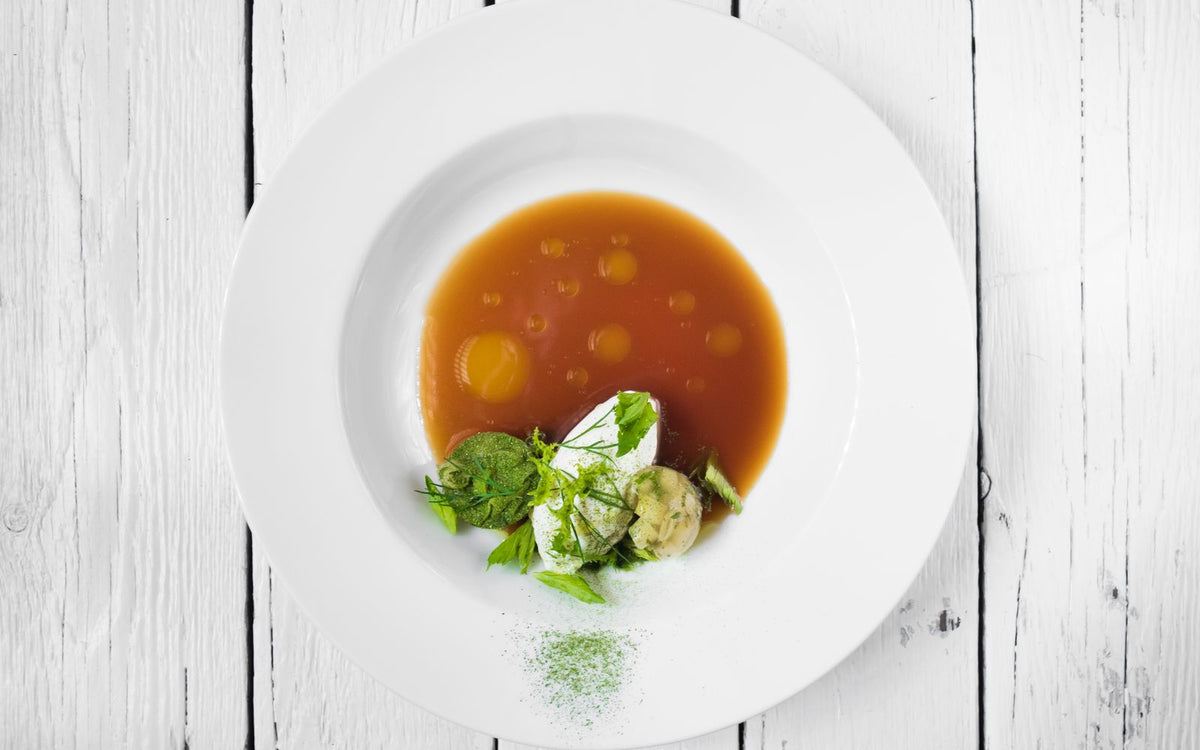
A shallow bowl of clear amber dashi broth with a herb garnish
Recipes

Kombu Dashi: The Broth Worth Learning

Dashi is the backbone of most Japanese home cooking, and the vegan version is two ingredients: water and a piece of dried kombu. That is genuinely it. No browning, no skimming, no six hours on the stovetop.

Once you have a jar of it in the fridge you will find yourself reaching for it instead of bouillon cubes — it makes rice, greens, beans and soups taste rounder without tasting of anything in particular.

Why this one is iodine-rich

Kombu is the most iodine-dense food in an ordinary kitchen, by a wide margin. That is exactly why this recipe is a broth and not a salad: you steep the kombu, take it out, and what you keep is a fraction of what was in the leaf. It is the sensible way to cook with kelp.

Ingredients

Makes about 1 quart.

  • 4 cups cold filtered water
  • 1/3 oz dried kombu (roughly one 4-inch square piece)

Method

  1. Wipe the kombu with a dry cloth if it looks dusty. Do not wash off the pale powder on the surface — that is flavor.
  2. Put the kombu and the cold water in a pan and leave it to steep for 30 minutes. If you have the time, leave it in the fridge overnight instead; the result is cleaner.
  3. Bring the pan slowly to just below a simmer over low heat. You want small bubbles at the edge, not a rolling boil.
  4. The moment it reaches that point, lift out the kombu and turn off the heat. Boiling kombu makes the broth slippery and slightly bitter.
  5. Cool and refrigerate. It keeps four days in the fridge and freezes well in an ice-cube tray.

Notes and swaps

  • Awase dashi. For the classic version, after removing the kombu add a large handful of bonito flakes, turn off the heat, wait 2 minutes and strain. Not vegan, but deeper.
  • Do not waste the kombu. Slice the spent leaf into ribbons and simmer it with soy sauce, mirin and a little sugar for ten minutes to make a savory condiment for rice.
  • On quantity. Kombu iodine content varies a great deal between species and harvests. One 1/3-ounce piece per quart, used as a broth base, is a measured way to cook with it. Eating whole kelp regularly, or taking concentrated kelp tablets, is a different proposition entirely.

Common questions

What do I actually do with it?
Cook rice in it instead of water. Use it as the base for miso soup. Braise greens or beans in it. Thin it with soy sauce and pour it over noodles.

Can I reuse the kombu for a second batch?
Yes, once. The second brew is lighter and works well for cooking grains.

The food-first habit

A jar of this in the fridge quietly upgrades everything you cook that week. If you have been topping up with Lugol's Iodine, this is the sort of low-effort kitchen habit that keeps food doing the work over the long run.

Recipes are published for general interest and are not medical or dietary advice. Iodine requirements vary from person to person, and iodine has an upper limit as well as a recommended intake. If you are pregnant, nursing, taking thyroid medication or managing a thyroid condition, speak to your healthcare provider before making significant changes to your iodine intake. These statements have not been evaluated by the Food and Drug Administration.

K
Kaley Schmidt
Iodine Journal

Writes for Lugols Originals on the chemistry, history and practical use of iodine. Read the full profile ›

Just added to your wishlist:
My Wishlist
You've just added this product to the cart:
Go to cart page