 English


0 item(s)
View cart
You have no items in your shopping cart.
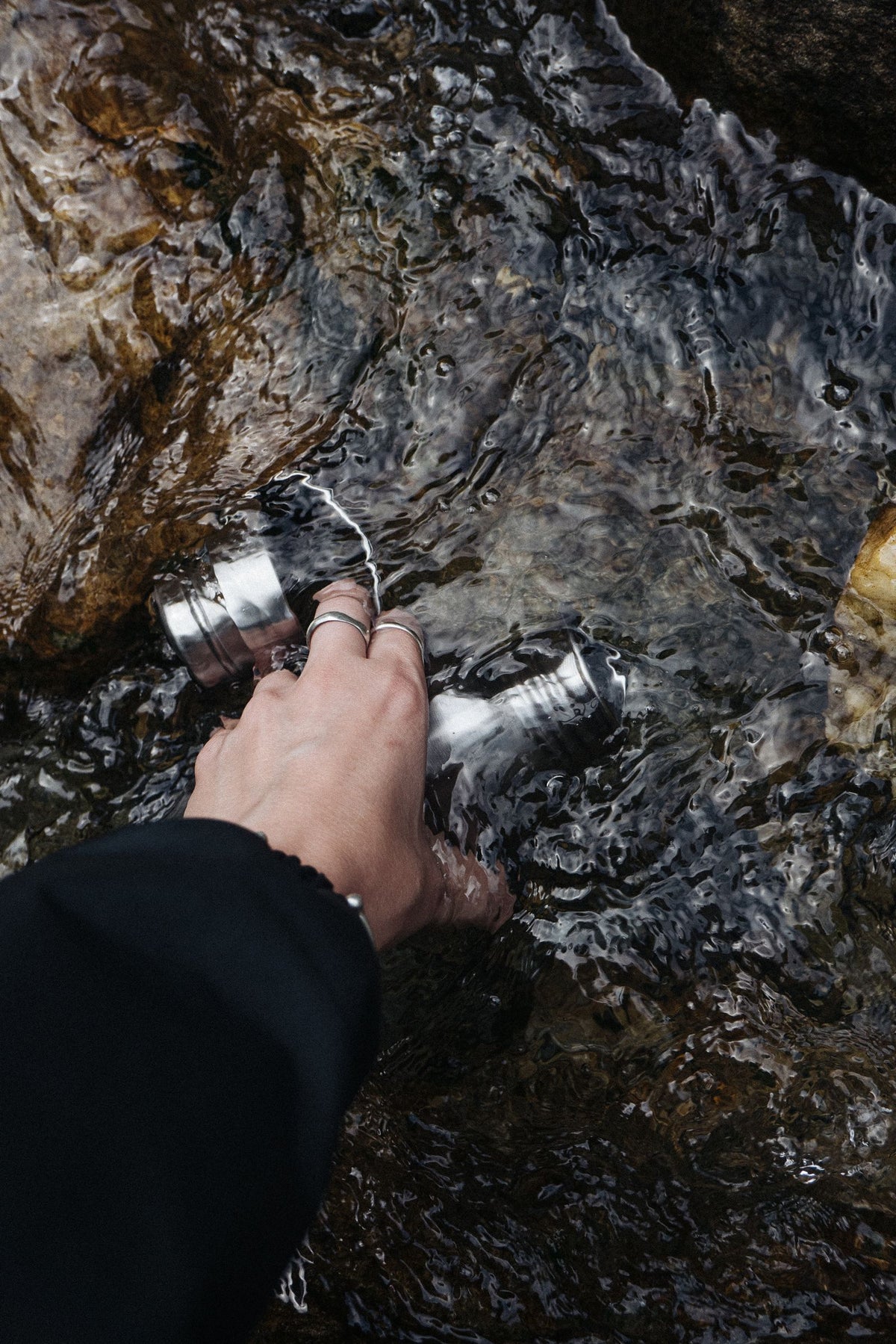
Fall is the best hiking of the year: cooler days, fewer people, clear streams. It's also when water treatment gets a little less forgiving. Cold water slows down every chemical treatment in your pack, and the sources you counted on in July may be lower and murkier by October. Here's a plain comparison of the three options most people carry, so you can pack the right one before the trip, not after.
Filters are fast and remove bacteria and protozoa, but most backpacking filters don't stop viruses. Iodine handles bacteria and viruses well and Giardia moderately, but it is not effective against Cryptosporidium. Chlorine dioxide covers all four groups, including Cryptosporidium, but needs the longest wait, especially in cold water. Many experienced hikers pair a filter with a chemical treatment for that reason.
| Iodine | Chlorine dioxide | Hollow-fiber filter | |
|---|---|---|---|
| Bacteria | Effective | Effective | Effective |
| Viruses | Effective | Effective | Not effective (most models) |
| Giardia | Low to moderate | Effective | Effective |
| Cryptosporidium | Not effective | Effective with long contact time | Effective |
| Typical wait | About 30 minutes, longer in cold water | 30 minutes to 4 hours | None |
| Weight and bulk | Very light | Very light | Light, but can freeze and crack |
Effectiveness ratings summarize the CDC's guidance on backcountry water treatment. Always follow the instructions on the specific product you carry.
Iodine and chlorine dioxide both work more slowly as water temperature drops. Product instructions typically call for doubling the contact time in very cold water. If you're pulling water from a snowmelt-fed creek, plan the wait into your stops.
A hollow-fiber filter that freezes with water inside can crack without showing any damage, and a cracked filter no longer filters. On cold nights, sleep with it inside your bag or jacket. If you think it froze, treat that filter as unreliable until you can replace it.
Silt and leaf debris shield microbes from chemical treatment. Let cloudy water settle, or strain it through a bandana, before adding any chemical.
Iodine has been used to treat water in the field for well over a century, and it still has real strengths: it is extremely light, it doesn't freeze or crack, and it has a long shelf life when kept sealed and out of light. Crystal-based systems like Polar Pure can treat a large volume of water from one small bottle. The trade-offs are the taste and the Cryptosporidium gap, which is why many hikers carry iodine as a lightweight backup to a filter rather than as their only method.
The CDC also notes that iodine water treatment is not recommended for pregnant people, people with thyroid problems, people with a known iodine sensitivity, or for continuous use over long periods. If any of those apply to you, chlorine dioxide or a filter is the better primary choice.
No. Water treatment products are designed to disinfect water and are dosed and labeled for that purpose. They are not dietary supplements, and dietary supplements are not water treatment products.
Follow your product's cold-water instructions. Many call for doubling the standard contact time when the water is very cold.
A filter for speed, plus a chemical treatment as backup for viruses, for a filter you suspect froze, or for water you aren't sure about.
See Polar Pure — an iodine-crystal water treatment bottle for hiking, camping and travel.
This article is for general educational purposes only and has not been evaluated by the FDA. It is not intended to diagnose, treat, cure, or prevent any disease, and is not a substitute for advice from a qualified healthcare provider — especially if you are pregnant, nursing, taking thyroid medication, or managing a thyroid condition.
Mark Donovan writes about the practical, built-to-last side of iodine for the Iodine Journal.

Writes for Lugols Originals on the chemistry, history and practical use of iodine. Read the full profile ›


