 English


0 item(s)
View cart
You have no items in your shopping cart.
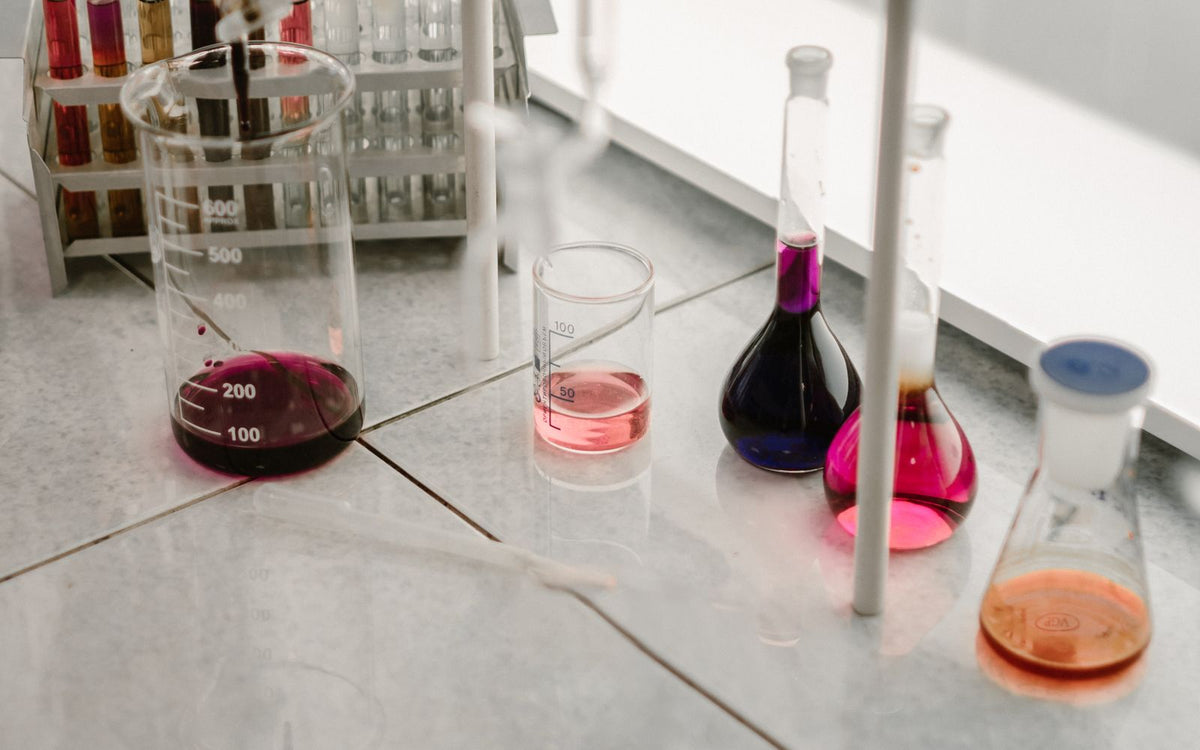
Percentage-based labeling on iodine bottles relates to underlying chemistry concepts like molarity and concentration. A beginner-friendly explainer.
Concentration describes how much of a substance is dissolved in a given amount of liquid. A spoonful of sugar in a cup of tea is more concentrated than the same spoonful in a pitcher. Chemists have several ways to express concentration, and the one you see on a label depends on who the label is for.
Percentages are the most familiar way to express concentration on consumer products. A higher percentage means more of the dissolved substance in the same volume of liquid. There are a few types of percentage:
For consumers, the key point is simple: within the same product line, percentages compare directly. A 10% solution is twice as concentrated as a 5% solution. See Reading Your Bottle's Percentage Label.
Chemists often prefer molarity, written M. Molarity counts molecules rather than weight: it's the number of moles of a substance per liter of solution. A mole is a fixed, very large number of particles, about 6.02 × 10²³. Because different molecules have different weights, the same weight of two substances can contain very different numbers of molecules. Molarity lets chemists compare how many molecules are actually present, which is what matters when predicting how substances will react.
Molarity is precise but not intuitive for most people. Percentages are easier to understand and compare at a glance, and they're the long-standing convention for pharmacy solutions. Labs may still use molarity behind the scenes, for example when preparing the thiosulfate solution used to measure iodine. See The Basics of Titration.
Concentration tells you how strong a solution is, but not how much you get per serving. That also depends on the size of each drop and the number of drops. That's why the Supplement Facts panel, which states the amount per serving, is the best guide to intake. See How to Read a Supplement Facts Panel and our concentration chart.
Our Lugol's Solution comes in six concentrations from 2% to 20%.
Does a higher percentage mean a different formula?
Not within the same product line. The formula is the same; a higher percentage just means it's more concentrated.
Do I need to understand the chemistry to use this safely?
No — you don't need a chemistry background to use a liquid iodine product as directed. Understanding the basics just helps you read labels and compare products more critically.
How does this translate into exact mg-per-drop figures?
See our drop-to-milligram conversion reference.
Shop Lugol's Solution — the traditional, trusted way people have supported their iodine intake for over 200 years.
Jessica Bennett writes about clean, ingredient-conscious living for the Iodine Journal.
This article is for general educational purposes only and has not been evaluated by the FDA. It is not intended to diagnose, treat, cure, or prevent any disease, and is not a substitute for advice from a qualified healthcare provider — especially if you are pregnant, nursing, taking thyroid medication, or managing a thyroid condition.

Writes for Lugols Originals on the chemistry, history and practical use of iodine. Read the full profile ›


